Victor J. Schoenbach
This document reviews the history of minority health/minority advancement activities at the School. Except for several items from the official SPH history (Robert Rodgers Korstad, Dreaming of a Time: The School of Public Health, The University of North Carolina at Chapel Hill, 1939-1989, Chapel Hill, NC, UNC-CH School of Public Health, 1990), the historical account is drawn from my unrehearsed recollection and should not be taken as authoritative until confirmed by others. Among other things, writing this down brought home to me the need for a formal compilation of this history. The listing of past activities is provided partly as a stimulus to such an effort and because a knowledge of history is of great importance for approaching the future.
The School has a long tradition of involvement in minority health research and education. In the 1940's, the School assisted with the creation of the Department of Health Education at the North Carolina College for Negroes (NCC, now North Carolina Central University). With Dean Rosenau's support, Dr. Lucy Morgan, chair of the UNC Department of Health Education (HEED), agreed to assess the feasibility of establishing a graduate program in health education at NCC. UNC faculty taught classes at NCC. Two of the students later became faculty at NCCU (Howard Fitts, who later chaired the NCCU Department of Health Education and after his retirement chaired the Durham County Board of Health) and UNC (Howard Barnhill who went on to become a member of the NC General Assembly). Ruth Hay and Margaret Blee of the UNC Department of Public Health Nursing taught public health nursing in the NCC nursing program. The School's reaching out to black people during the Jim Crow era "was upsetting the hell out of everything. Those people in South Building, they couldn't understand. You weren't supposed to do things like that." (John Larsh, quoted in Dreaming of a Time, p51).
By enrolling students from developing countries, the School began to change the complexion of the campus, and when the civil rights sit-ins arrived in Chapel Hill in 1963, SPH faculty were among the most vociferous supporters of integration. Faculty invited black activists to speak at the School, and many faculty supported the food service workers' organizing efforts in 1968 and 1969.
The first chair of the Department of Epidemiology (EPID), Sidney Kark, had emigrated from South Africa and its apartheid policies. He recruited John Cassel, another anti-apartheid South African emigree, who with Al Tyroler and Curtis Hames from Claxton, Georgia launched the Evans County Cardiovascular Study, which for many years was the only cardiovascular disease epidemiologic cohort study with a substantial enrollment of black participants. Another South African anti-apartheid "refugee", Guy Steuart, became chair of HEED.
When UNC-CH integrated, several black students enrolled at the SPH. Among them were:
(additional minority students from the 1960's and 1970's are listed on a glass panel in the Michael Hooker Research Center).
In response to a "Statement of Concerns" issued by black students at the School, Dean Mayes appointed a committee, whose recommendation led to the appointment of William T. ("Bill") Small (ESE [ENVR], MSPH, 1969) as a full-time minority recruiter in 1971. The following fall, the number of minority students increased from 20 to 49. In 1977 the Minority Student Caucus (whose name was for a time the Black Student Caucus) organized the first Minority Health Conference, which became an annual event subsequently emulated by African American students at the University of Michigan School of Public Health.
During the 1970's, two SPH departments were chaired by people of color. Dr. Joseph Edozien, a Nigerian, chaired NUTR between 1975 and 1986. Dr. Edozien, known in the US for his involvement as a key figure in the first nationwide WIC evaluation and his earlier leadership in Nigeria, retired to Nigeria and the position as King of the Asaba tribe. His son Anthony enrolled in the Department of Epidemiology some years later.
Dr. Sagar Jain chaired the Department of Health Administration (HADM), now Health Policy and Administration (HPAA). Under Dean Greenberg's leadership, African Americans began to appear among the School's faculty, including John Hatch in HEED and Sherman James in EPID. John Hatch's work and the community organizing emphasis in the Department of Health Education under Guy Steuart led to various projects aimed at improving health of minorities and the elaboration of the lay health advisor concept. Eva Salber, a leader in this area, was a faculty member at Duke University but connected to the School of Public Health by marriage to Harry Phillips {HADM}, also a South African emigree; Ethel Jean Jackson (later an instructor in HEED) worked for her after receiving her MPH from HEED in 1973; Eugenia Eng (now a professor in HBHE) was one of John Hatch's students.
During the 1980's, the Department of Biostatistics (BIOS) ran a summer course for minority undergraduates to introduce them to and help prepare them for graduate studies in public health. David Kleinbaum was the original organizer. [David's email of 14 Jul 1999 10:09:55 said, "I was very much involved in it, and was the original organizer, and taught several versions of it over the years (80's but not 90's) we had it. I think at some point Ed Davis took it over, so you might get a more recent update from him. Also George (whose last name I forgot) might be the most recent director of whatever is going on. Bill Small was also peripherally involved.]
During the 1980's and especially following the 1985 Report of Secretary's Task Force on Black and Minority Health, minority health became an area for specific attention for researchers and federal granting agencies. Sherman James was developing the John Henryism concept and studying blood pressure in African Americans in and around Edgecombe County. The cardiovascular disease epidemiology group was involved in numerous studies (e.g., the continuation of the Evans County study, the Charleston Heart Study, the Hypertension Detection and Follow-up Program, and later the Atherosclerosis Research in Communities Study) with large numbers of African Americans. There were numerous other studies that might be listed here, but I do not recall (or didn't know about) them.
One I do know about is the Quit for Life study. In response to an RFA for smoking cessation research among Black Americans, several SPH faculty (Victor Schoenbach, Dana Quade, Victor Strecher, Bert Kaplan), Dr. Tracy Orleans at Duke University and now at the Robert Wood Johnson Foundation, and colleagues (William Beery, Edward ["Ned"] Brooks, and Robert Konrad) at the Health Services Research Center (now the Cecil G. Sheps Center for Health Services Research) conducted a collaborative randomized trial with the North Carolina Mutual Life Insurance Company, headquartered in Durham, the largest black-managed insurance company in the country. The late Dr. Charles Watts (who passed away in 2004) and the late Charles Blackmon (who passed away in 2005) led NC Mutual's participation.
In response to another targeted RFA, SPH faculty (Victor Schoenbach, Victor Strecher, Eugenia Eng, Sandra Headen), alumni (Russell Harris), and then doctoral student Paul Godley created a Minority Cancer Control Research Program (MCCRP) through the Lineberger Comprehensive Cancer Center. The five-year program laid the basis for several major research projects focused on or including major objectives related to minority health, including Jo Anne Earp and Eugenia Eng's NC Breast Cancer Screening Program (NC BCSP) and Jan Atwood and Boyd Switzer's studies of fiber intake by members of black churches.
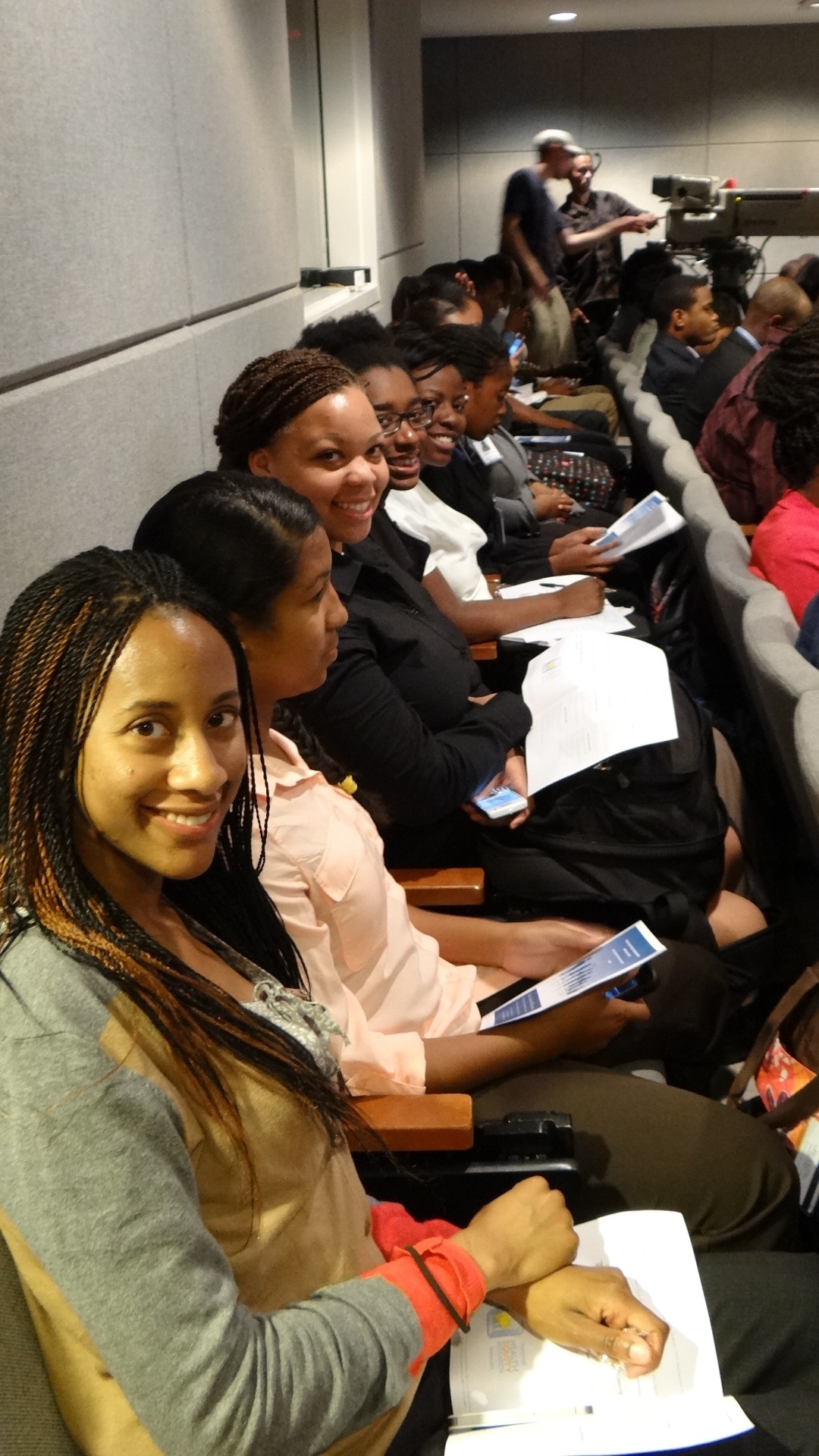
The Minority Health Conference, still led by the Minority Student Caucus and Bill Small, with modest financial support from the Dean's Office, lapsed for two years (1989, 1990). In 1991 the Conference resumed with MCCRP co-sponsorship and increased Dean's Office support, including extensive planning, marketing, and meeting support donated by the School's Office of Continuing Education. Attendance jumped from double digits to several hundred, and after two years of making use of overflow rooms wired to Rosenau Auditorium, the Conference moved to the William and Ida Friday Continuing Education Center. By 1999 the capacity of the Friday Center Grumman auditorium had been reached.
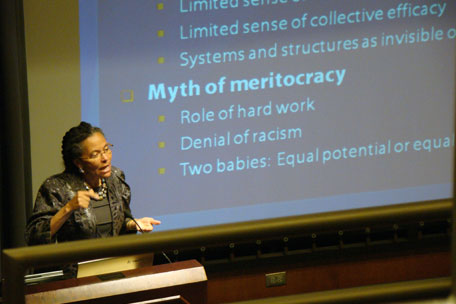
A retirement celebration for Bill Small was held at the close of the 21st Annual Minority Health Conference on February 19, 1999. At the beginning of the Conference, Dean William Roper announced that henceforth the keynote address for the Conference would be known as the William T. Small, Jr. Keynote Address. Starting with that year (or perhaps 2000), the William T. Small, Jr. Keynote Lecture and sometimes other sessions were broadcast via the Internet. The Minority Health Project (then led or co-led by Victor Schoenbach) organized the broadcasts with the assistance of the School's Center for Distance Learning and Communication (CDLC), now the Department of Instructional and Information Systems.
The following year the Minority Health Project organized and the CDLC provided without charge an Internet broadcast of the Keynote Lecture by Dr. Keith Wailoo. In 2001 State Health Director Dr. Dennis McBride provided funding for a satellite broadcast of the Keynote Lecture and closing panel of the Conference. Although funding became available on short notice, 66(?) downlink sites registered for the broadcast. During the subsequent years the Minority Health Project organized and helped to sponsor Internet and satellite broadcasts of the Keynote Lectures by Mr. Richard Moore (2001), Dr. Sherman James (2002), Dr. Camara Jones (2003), Dr. Mary Northridge (2004), and Dr. Henry Lewis Taylor (2005). The broadcasts by Dr. James and Dr. Jones had well over 100 satellite downlink sites and numerous viewers of the webcast, both live and on-demand versions.
The idea of having a specific program focused on minority health arose at some point during the mid-1980's, and indeed the grant application for the MCCRP envisioned the MCCRP as the foundation for a broader Minority Health Research and Education Program for the School. During the strategic planning activity initiated by Dean Ibrahim (and later folded into the University-wide planning activity that Chancellor Paul Hardin instituted in 1989), the draft plans for several departments and eventually the draft for the School included priorities related to minority health, and the creation of a Minority Health Research and Education Center was adopted as one of the six goals for the School's plan submitted to the Chancellor in 1991.
Following up on the strategic planning activity, the Dean took a number of steps in the direction of establishing a Minority Health Research and Education Center (MHREC). A committee was created (in 1993?), chaired by Dr. Dorothy Browne (Associate Professor in the Department of Maternal and Child Health [MHCH]), to develop a plan for the Center. As part of the "B budget" (expansion funding) process, the School submitted a request for approximately $500,000 as core funding for the Center (unfortunately the state encountered fiscal problems that year, so expansion funding became a nonissue). Dean Ibrahim decided to use the School's allocation of NIH Biomedical Support Grant monies for a small grant program for minority health related pilot studies, selected through a review process organized by the Center planning committee.
During this same period, the number and scope of minority health related projects grew substantially, with the NC BCSP (Jo Anne Earp and Eugenia Eng), the Carolina Breast Cancer Study (Beth Newman), Project RAPP (Dorothy Browne and Victor Schoenbach, with Phil Costanzo and John Coie from Duke, UNC HBHE alumnus Theodore Parrish from North Carolina Center University, and two community coalitions in Durham), and the Minority Health Project (Drs. Trude Bennett [MHCH], Dorothy Browne, and Lloyd Edwards [BIOS]). The time was ripe for the School to launch its own center, and the Minority Health Project (MHP) was funded partly with the understanding that it would become a part of the center being created. (A short history of the Minority Health Project can be found at www.minority.unc.edu/institute/about.htm). Other UNC schools were also launching minority-oriented projects and centers, and student activism brought the longstanding request for a Black Cultural Center to the fore.
For several years Bill Small kept the MHREC Committee functioning and the Minority Health Conference thriving. Besides the small grants program, Dean Ibrahim provided significant funding for both the Conference and also for the MHP. But the effort to create a center was hamstrung by the lack of funding to bring in a director and the lack of a director to raise money. In addition, the leading proponents of the center were now heavily involved in the research projects they had launched. The MHP developed a highly successful videoconference component, but the MCCRP was scaled back as its original five-year award ended. Also, the number of minority faculty was not growing, which did not augur well for the continued expansion of minority health activities at the School.
Dean William L. Roper's arrived in 1997? and enunciated his wish to (citing President Bill Clinton) "make the School look more like America". Dean Roper renewed the School's expressed commitment to creating a center, and made a nearly successful attempt to recruit Sherman James from the University of Michigan to lead it. Michigan countered with the offer of a Center for Research on Ethnicity, Culture, and Health, so the Dean re-energized the planning activity for the newly-christened Institute for Culture, Ethnicity, and Health. The Dean brought in a series of nationally-recognized leaders in minority health research to advise the School on what the Institute's mission should be, who might be recruited to lead it, and how it might be created (visitors included Drs. Risa Lavizzo-Mourey [currently President of the Robert Wood Johnson Foundation], the late Herbert Nickens (with whom the School was later discussing a position at UNC until his untimely death), Eugene Washington, Shiriki Kumanyika, James Johnson, and Peter Dual).
The Minority Health Conference continued to be highly successful, the Minority Student Caucus expanded its activities in several areas, and the Dean brought in Aundra Shields, J.D., as Associate Dean for Student Affairs.
In November 2001 the Agency for Healthcare Policy and Research (AHRQ) issued an RFA for the creation of several centers on eliminating disparities in health care. Another of Dean Roper's initiatives was the Program on Healthcare Outcomes, which involves a collaboration of the Schools of Medicine and Public Health and the Sheps Center for Health Services Research, with substantial funding from GlaxoWellcome. The Dean "encouraged" the deputy director of the Program (Tim Carey, a physician-epidemiologist who was later named director of the Sheps Center) to pull people together to submit a proposal, which the RFA specified should consist of several research projects plus a small amount of core resources. Dr. Carey convened a group of faculty who had projects that could be pulled together very quickly (the RFA, issued in November, had a mid-January deadline!) and somehow managed to develop a proposal with about six individual studies, Dr. Paul Godley as co-PI, and relationships with NC Central and Shaw Universities. The MHP, which I have been leading since Lloyd Edwards took a position at Duke in July 1998, had a small role in the proposal.
During early January 2000, Dorothy Browne (who took over the leadership of the Minority Health Project for 2000-2001?), Trude Bennett, and Victor Schoenbach met with Dean Roper to ask him to again contribute $30,000 to enable the MHP to hold the 2000 Annual Summer Public Health Research Videoconference on Minority Health (which the Dean had funded as an add-on to the SPHRIMH for the preceding three years). The discussion broadened to the future of the MHP (whose five-year award ended in September, 1999) and the IECH. Among other things the Dean suggested that perhaps the proposal through the Program in Healthcare Outcomes was the best shot at getting some funding at this juncture and that an AHRQ-funded center could become the foundation on which to build. He was not saying that he was abandoning the idea for a center within the SPH itself nor ruling out other initiatives, but this approach did sound quite different from what he had been saying up to that point. Two events that may have had some influence are the untimely death of Chancellor Michael Hooker, who passed away in June 1999 after unsuccessful treatment for a very aggressive lymphoma, and Hurricane Floyd, which inundated eastern NC, causing widespread destruction and economic loss. All state agencies including UNC were asked to turn back a percentage of their budgets for disaster relief efforts (a practice that became routine during subsequent years as the state's economy faltered). So the money that the Dean must have had access to at one point became greatly constrained.
The University's proposal for to AHRQ succeeded, though not in the first tier of awards so that the budget was drastically cut, and after intensive fund-raising a scaled-down version of the Center of Excellence for Overcoming Racial Health Disparities was launched. The following year (?) Dean Roper and the dean of the School of Medicine convened a meeting to propose a program along the lines of the Institute for Ethnicity, Culture, and Health. The program was to be University-wide, centered in the Division of Health Affairs, and led jointly by the Schools of Public Health and Medicine, which were providing funding. Dr. Paul Godley was designated to chair the Steering Committee. After several meetings the name "Program on Ethnicity, Culture, and Health Outcomes" (ECHO) was selected, a proposal was submitted to GlaxoSmithKline that resulted in several years of start-up funding, and ECHO was given office space on the second floor of Rosenau Hall, with Dr. Anissa Vines (a recent doctoral graduate from the Department of Epidemiology) as Associate Director.
In one of its early successes, ECHO (Paul Godley, principal investigator) joined with Shaw University (Daniel Howard, principal investigator) received a five-year award from the National Institutes of Health-National Center on Minority Health and Health Disparities (NIH-NCMHD) under the Project EXPORT program (Centers of Excellence Partnerships for Community Outreach, Research on Health Disparities and Training Project) to create the Carolina-Shaw Partnership for the Elimination of Health Disparities.
Meanwhile, Associate Dean Janet Porter in collaboration with James Johnson of the Kenan-Flagler Institute for Private Enterprise obtained funding from the W.K. Kellogg Foundation to create the Kellogg Fellowship for Emerging Leaders in Public Health (ELPH). With the theme "Managing through Turbulent Times," ELPH identifies minority public health leaders serving African American, Latino, and Native American communities. ELPH develop emerging leaders' abilities to determine how leadership issues impact a minority community, analyze crisis scenarios, effectively manage ever scarcer, dwindling financial and human resources, successfully handle an increasingly diverse workforce and community clientele, create sustainable organizations, and communicate effectively to citizens about health or environmental crises.
Dr. Dorothy Browne spent the academic year 2001-2002 on sabbatical at Morgan State University and the following August announced that she would remain their as Professor of Public Health. When her sabbatical began Dr. Schoenbach had resumed the leadership of the Minority Health Project, and when she resigned her UNC faculty position it became necessary to move the Project from MHCH. After protracted discussions the Project was made a part of ECHO, though MHCH continued to provide office space until 2005 and the renovation of Rosenau Hall. Purchasing and accounting services were provided through the Dean's Office during 2002-2004. The Department of Epidemiology, which had provided logistical and budgeting support for several MHP grant proposals, assumed responsibility for financial, accounting, and computer support services in September 2004.

The 26th Annual Minority Health Conference scheduled for February 2004, with the 6th Annual William T. Small, Jr. Keynote Lecture to by given by Mary Northridge, was prevented from taking place by a short, though intense, that began about 9 hours before the Conference was to start and ended before noon. Dr. Northridge's lecture was given two months later (April 19) from Rosenau Hall, as a satellite and Internet broadcast. Bill and Rosa Small were in attendance, and Bill Small gave welcoming remarks from the podium. Danielle Spurlock, who co-chaired the Minority Health Conference Planning Committee continued in that role for a second year. Joined by Christopher Heaney, the two led the planning for the successful 26th Annual Minority Health Conference, which was presented at the William and Ida Friday Center in February 2005. Janet Porter (representing Dean Margaret Dardess), Archie Ervin, and Richard "Stick" Williams, Chair of the UNC at Chapel Hill Board of Trustees, gave welcomes. The 7th William T. Small, Jr. Keynote Lecture was given by Henry Lewis Taylor, and broadcast via satellite and Internet, with Sacoby Wilson as moderator.
In 2005, the Minority Health Project and the Sonja Haynes Stone Center for Black Culture and History produced the first broadcast from the Cobb Theatre in the Center's new building. The broadcast featured a panel with Rep. Melvin Watt and five other health disparities experts, and was moderated by Stephanie Crayton, Media Relations Manager of UNC Healthcare.
The Annual Minority Health Conference continued its wave of success. Registrations are regularly closed before the “early registration” cut-off date. The audience for the Keynote Lecture broadcast has continued to grow, with very large audiences for the Keynote Lectures by Meredith Minkler, David Malebranche, and Nancy Krieger.
Meanwhile the Annual Summer Public Health Videoconference on Minority Health has also continued extending its collaborations at UNC and elsewhere. The 2006 Videoconference was planned as a single two-hour session to be produced one again at the Sonja Haynes Stone Center for Black Culture and History. The topic - race-specific medicine - was proposed by William (“Sandy”) Darity, Jr., Boshamer Professor of Economics and Director of the Institute of African American Research. He recommended the lead speaker, Joseph Graves, and said that the IAAR would co-sponsor the broadcast. Jay Kaufman, who has often been a consultant on selecting speakers for the Videoconference, offered several. Because of the typically late planning cycle (invitations in January and February for a June event), many speakers were unavailable, but Pilar Ossorio agreed to speak and, finally, Morris Foster. Several attempts to recruit an Asian-American speaker were unsuccessful due to prior commitments for several who were invited. Stephanie Crayton agreed to be the moderator, and Vijaya Hogan came through with a more appealing title for the session.
A combination of circumstances led to planning of a second session of the Videoconference, broadcast from the campus of Morgan State University. Supplemental funding from the Minority Health Project’s CDC sponsor (the Office of Minority Health in the National Center for HIV, STD, and TB Prevention) and a generous cosponsorship from the American Legacy Foundation also offered made the session possible. Instructional Media Services manager O.J. McGhee (who had once worked in video at Morgan State University) and Zipatly Mendoza (past co-chair of the Minority Student Caucus and Videoconference coordinator) traveled to Morgan State University twice, once to prepare for the broadcast and the second time to produce it two days after the opening session at the Stone Center.
Sandy Darity also proposed the topic for the 13th Annual Summer Public Health Research Videoconference on Minority Health. The topic was "Does racism make us sick?" (a topic that Vic was initially dubious about, since it seemed so obviously true). The program, in June 2007, was broadcast from the Stone Center and was our most popular to date. Besides a large live audience, the archived webcast has been widely viewed including by students in courses that require it.
Major construction in the parking lot adjacent to the Stone Center precluded continued broadcasts from that location, so the 14th Annual Videoconference (on "Men's Health Disparities") was broadcast from the Tate-Turner Kuralt Building of the School of Social Work. The broadcast was dedicated to the memory of Audreye Johnson, the faculty member who among many other accomplishments created and led the Black Experience Workshop conducted by the School of Social Work over many years.
The following year's Videoconference ("Breaking the Cycle: Investigating the Intersection of Educational Inequities and Health Disparities") was also broadcast from Tate-Turner-Kuralt and dedicated to the memory of John Turner, a kay figure in the history of that school. Dean Turner passed away in February 2009. The broadcast was moderated by Sen. Howard N. Lee, who was a student in the School of Social Work in the 1960's, went on to be elected the first African American mayor of a predominantly black southern town (Chapel Hill) and has continued a lifetime of public service in North Carolina (including serving in the cabinet of Governor Jim Hunt, in the NC Senate, as Chair of the State Board of Education, and as Director of the Governor's Education Cabinet. The 14th Annual Videoconference was planned by a committee drawing members from various campus organizations. DeVetta Holman-Nash, associate director of Counseling and Wellness Services of Campus Health Services proposed the topic and led the program committee.
2009 also saw the first "partner conferences" held in conjunction with the Minority Student Caucus' Annual Minority Health Conference. Student organizations at five other schools of public health organized events on the same day as the 30th Annual Minority Health Conference and shared the keynote via webcast. (The list of partner conferences is at www.minority.unc.edu/sph/minconf/2009/partnerconferences/ ). In 2009, Bill Jenkins, a 1978 Ph.D. graduate from the Department of Epidemiology and a long-time supporter of the Minority Health Project's work relocated from Atlanta and took a part-time position with the Institute of African American Research, working with its new director, Fatimah Jackson, Ph.D. Bill joined the planning committee for the 15th Annual Summer Public Health Research Institute and Videoconference on Minority Health and became Co-Director of the Minority Health Project.
To be continued.
Notes: The history of the Minority Health Project can be found at www.minority.unc.edu/about/, www.minority.unc.edu/institute/about.htm, and the project’s annual reports. The Minority Health Project website (www.minority.unc.edu) maintains historical information for the Annual Minority Health Conference, including the list of all titles and keynote speakers since its inception, and for the Annual Summer Public Health Institute and Videoconference on Minority Health. The website also retains information on previous events.
Other resources:
11/18/1999, ..., 1/7/2006, 2/28/2008, 11/2/2009 Victor_Schoenbach@unc.edu